God's Little Acre

God's Little Acre
Lord, make way for gold

the girlfriend experience

the girlfriend experience
chelsea's work

Trash Humpers

Trash Humpers
broken, faked, MADE

Sunday, December 15, 2013

ALL SEEN IN 16 OR 35MM: 2013 rep highlights + discoveries pt 1- image (some seen before 2013)


JEREMIAH JOHNSON(S. Pollack, 1972)


JEREMIAH JOHNSON 
 
HANGOVER SQUARE (J. Brahm, 1945)


HANGOVER SQUARE


HANGOVER SQUARE


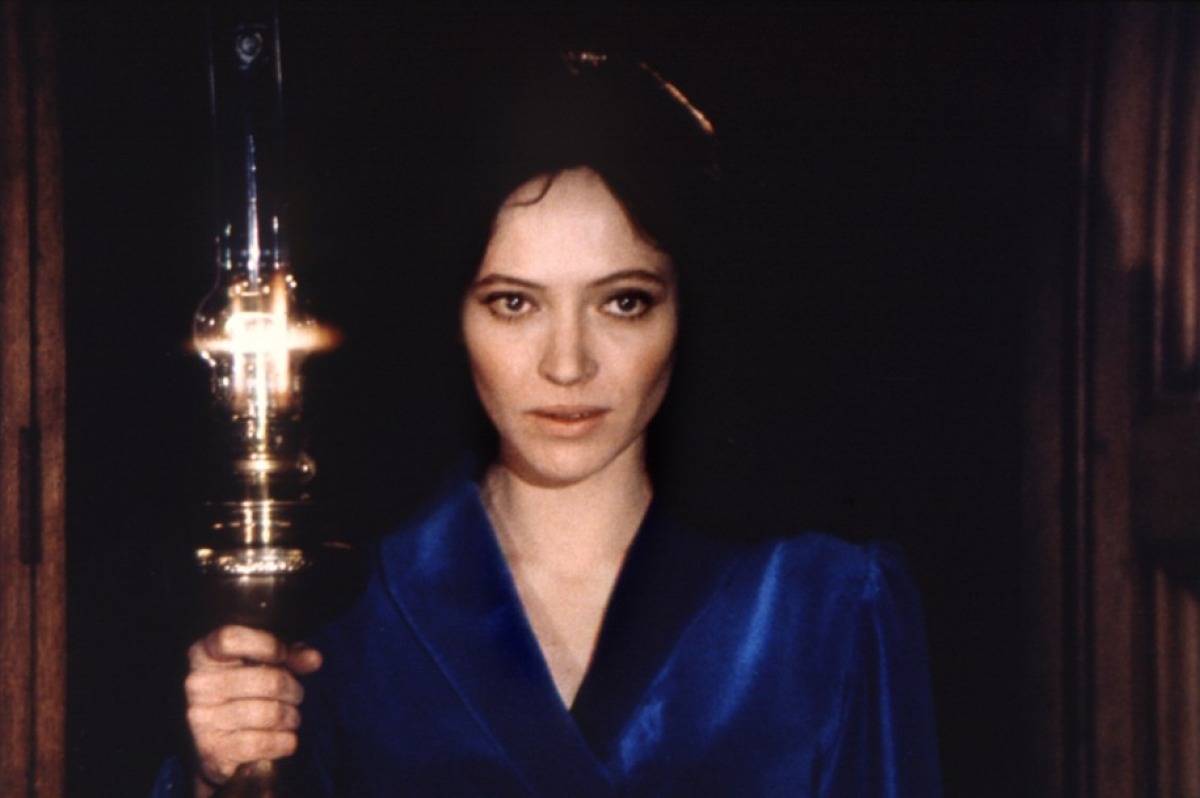
RENDEZ VOUS A BRAY (A. Delvaux, 1971)


RENDEZ VOUS A BRAY


THE LITTLE FUGITIVE (R. Ashley, M. Engel, R. Orkin, 1953)

THE LITTLE FUGITIVE


ELECTRA GLIDE IN BLUE (J.W. Guercio, 1973)


ELECTRA GLIDE IN BLUE
ZAZA (A. Dwan, 1923)

ZAZA


 SOUTHERN COMFORT (W. Hill, 1981)


SOUTHERN COMFORT


THE DEMONS (J. Franco, 1972)


THE HOUSE THAT SCREAMED (N. Ibanez Serrador, 1969)


DEAD RINGERS (D. CRONENBERG, 1988)

 
DEAD RINGERS


THROUGH THE LOOKING GLASS (J. Middleton, 1976)


THROUGH THE LOOKING GLASS


NOUVELLE VAGUE (J-L Godard, 1990)


NOUVELLE VAGUE


EMPEROR OF THE NORTH (R. Aldrich, 1974)


EMPEROR OF THE NORTH


JEOPARDY (J. Sturges, 1953)


                                                           JEOPARDY


VIVRE SA VIE (J-L GODARD, 1962)


NORTHERN LIGHTS (R. Nilsson, J. Hanson, 1978)


Northern Lights 1978

NORTHERN LIGHTS

BODY SNATCHERS (A. Ferrara, 1993)


BODY SNATCHERS

Monday, October 21, 2013

Feelings in and about 12 YEARS A SLAVE

To write of Slavery in America is beyond whatever little capacity i may have for writing.  Its hugeness and wrongness, depravity and complexity is also what makes it somewhat impenetrable for me, as i tend to write what i know from experience.
So, without minimizng the discussion of slavery, i would like to write about Steve McQueen's 12 YEARS A SLAVE in relation to the emotional register it operates in.
Solomon (Chiwetel Ejiofor) is a freed man who is tricked and subsequently captured and sold at an auction block down South.
Noone believes he is not a slave, and he is told that if anyone finds out he can read or write or that he was once free, his life will be in horrible danger.

Moments of his past life flash to us; scenes of proper dress, proper greetings in stores, the freedom to shop*, a  human allowed to hold his head high and provide for others.

In his new life he is surrounded by depression.  The heightened emotional despair of the people he is enslaved with tempers our experience of Solomon's journey. The tone of the film is established with an intensity of emotion and psychological trauma.
One of the  slaves, Patsey (Lupita Nyong'o) ,repeatedly tries to bribe Solomon to kill her.
Another woman, separated from her children, wails and sobs incessantly, even when threatened by the slavemasters.
One scene features the slaves and farmhands gathered on some stones in the field, listening to a sermon by the slave master, and she loudly screams her desolate, hopeless cries throughout.  Solomon, looks on, and internalizes.
noone can relate to the dehumanization of Slavery, but here we can relate to the brutality of having to show up and please others; paraded around when we are broken. Just as we now see Solomon , bloodied, scarred inconceivably, wearing rags and picking cotton, following orders...
This is the effect of the fear and shame of not being able to show the world that your ability to feel love and comfort has been overcome with fear and shame.  Massive, massive psychological damage is throbbing inside every vein and every follicle, yet there is Solomon, committing his strength to menial chores, and holding in emotion we see overcoming him in rather  small gestures; even flatly telling the screaming woman to just stop crying.

                                       Solomon's deeply injured spirit behind the eyes

There is a moment when Solomon is nearly killed by an attempted hanging. The scene is temporally distended. The sound of the rough rope on his skin is measured, constant. Another inch and it would have been over. He is left hanging there near death for this long period of time, as we watch in real time, no edits that i noticed. the shot becomes broader and we see the action continue around him, he is clearly near death but quiet, the voice literally broken from his soul. Other slaves are running around and past him in the shot, it is daytime so we see children frolicking. we see other slaves working. we see white people look at him and pass by as if he is not there. hanging from a tree. Here lies a worthless man; just go about your day and pay him no mind. The sadness and brokenness of this man are on display, yet seen muted. and this is the part of the storytelling that is so effective and so acute. The prison of loneliness and despair, is so much more painful because he can not revel in it. a depressed freed person can isolate, and they can cry, maybe they can stop working and stop seeing their loved ones, alone in their pain or their trauma. here the trauma and damage of slavery kept its victims parading around as hollowed souls, unallowed to feel until what may be the end of the line, whether it be freedom, or more likely death.

McQueen has made a beautiful and rich film about an ugly thing.


*Much is made of the debt of the white men and the pressure of being men; of owning property, of paying debts, of keeping their wives, of keeping appearances. Even the wealthy plantation type homes seem to be in financial turmoil. The economics of slavery are re iterated in the flashbacked scenes of Solomon and his family living an idealised life. we see them in a beautiful shop and they are free because they are not owned but also because they can be free in what they choose to buy, in what they choose to wear, and where they choose to live.
Freedom and slavery both intertwined inexorably through Capitalism.

Sunday, October 13, 2013

Mike Nichols HEARTBURN

This song kills me
On a deeply personal level.  Revisit HEARTBURN
http://youtu.be/c0A7jAVDPJU

Friday, October 11, 2013

link in honor of TROUBLE EVERY DAY screening this week in a new 35mm restoration

http://web.archive.org/web/20130117023018/http://www.lafuriaumana.it/index.php?option=com_content&view=article&id=649:sick-fulfillment&catid=25:rapporto-confidenziale&Itemid=27

Monday, September 30, 2013

NORTE: END OF LONG TAKES AS WE KNOW THEM

I wanted to have one specific moment that jumped from the screen and attached itself to me.
That one specific moment, the type that usually comes only after soaking myself in a world of long takes, slowed down scenes and conversations;ones that often emerge from the 7 hr plus sort of films one expects from Lav Diaz.
Seeing his latest film at NYFF yesterday, NORTE, THE END OF HISTORY, i wasnt left with any one or three moments that tore at my spirit and emerged bigger than time. This is something ive felt at other Diaz films, such as the the slow, temporally experiential black and white ones where character and setting bore at you until they become screamingly specific and touching. Such lessons are unhurriedly cultured in MELANCHOLIA, FLORENTINA HUBALDO,CTE as well as EVOLUTION OF A FILIPINO FAMILY.
 All three of those films, all movies i strongly admire, were experiences, trials, and immersive oppurtunities.
NORTE, just as esteemable, accomplishes its ends in more specific and targeted ways.

Some level of poeticism has been razed, perhaps in honor of narrative cohesion.  The narrative unspools over a group of people whose lives touch each other in the ways that the touch of a hand impact another in a film like Bresson's L'ARGENT or PICKPOCKET.  The victims of the film are disparate yet connected, by way of a novelistic approach to form. One victim rises like a phoenix, imprisoned for a crime he did not commit, he has a chance to separate from Capitalistic struggles and nurse his Spirit. Another victim, depicted as a pig, is denied our pity. Later in the film an actual pig is separated from a farm family to be sold, and a child is distraught over losing him. Soon after , a third major vicitm is killed, and it is an innocent dog.  Now the perception of the woman who was depicted as a pig is complicated. Diaz illustrates his points by elevating the spirtual content of people and denaturing the benefits of Capitalist community.


His other films speak to Capitalism and the cruetly and evil that is borne from money.
But they do so in more langorous and roundabout ways. NORTE seems to have the same aims but delivers them, still in long take, but in shorter , tighter long takes And in color.. A few minutes may be spent on a small urban studio apartment shot , complete with large dog picture on the wall and a japanese lantern and bed.  But unlike Diaz' other films, this one is directly related to plot, although it may seem initially as uneventful as the many long shots that add up to the cumulative experience of his other films. This information in this shot informs us later when the character who lives here is reunited with the dog in the photo.
There is less odd mannerism and character observation; Diaz seemingly more in favor of direct political renderings of history. To be both crude and accurate this is Bresson meets Dostoyevsky meets Cormac McCarthy's THE ROAD. Coming out in between  the birth of the new terrorism in 2001 and the major american recession of 2008, THE ROAD always spoke to me as a novel about...the end of history. But specifically the end of American history, that story of a cowboy and his son, who could no longer expect to fulfill a dream of a better world and a capitalist climb.
There is a moment in THE ROAD, a book i read several years ago, that still vibrates bracingly with me. The man and his son are walking along and come upon a campsite where everything,  as it is at the end of the world where only cannibals and a few 'good' men remain, is covered with ash and embers. There is something that had been cooked that is charred over coals. As the young son realizes what it is the father suddenly sees it is a small human infant, headless, who had been charred and eaten.

I recalled this moment a couple of weeks ago when I read a novel called THE BALLAD OF WEST TENTH STREET. i was not too fond of this book, but there is one notable strand of the story that deals with a nice homeless man who has picked up and touchingly cares for a small cat who becomes his best friend.
There is a character in the book who is described as the Angry One..he is another homeless man, but not one who is able to connect with people and animals as the nice one does. All he can do is compare and look at others and see what he himself does not have, so all he can do is destroy things for others.
In one elongated sequence of the book he attacks  the cat until he is drowned in a well. I recall reading how despite his clawing at the walls and trying so hard to live and to survive, eventually the cat felt the wet fill its lungs, and then it died.
This is a beautiful moment in the book, and it is also so desperately sad because it is so true. we are all destroyed by our wants and our needs not being met. We are destroyed by the greed and destruction of our culture.
The same moment reminds me of many moments in THE ROAD and the way that amazing book is written.
I had the oppurtunity to be reminded of  both of these books in the third quarter of NORTE, THE END OF HISTORY. That beloved dog in the bedroom photo who is lovingly reunited with...he is murdered in a wordless, extended scene where anger, comparison, mania and guilt culminate in violent psychosis.
There is a more pivotal (plot wise) murder earlier in the film, but the murder of the dog is that one thing that jumped off the screen to me. The emotion of this scene is so much more confusing and hopeless.
The first murder screams politics, because the woman killed is a Capitalist pig who lives a privliged bourgeois existence. She is perceived as less of a victim because of her financial status, but after the murder of the dog her  role of victim is clarified . The slaughtered woman, the dog, and the man wrongly imprisoned for her crime, are all buried in the ashes of Capitalism;  their fate caught by the  look of The Angry One.

Tuesday, July 9, 2013

updated mid year best of...

only one in order is number 1.

1) PARADISE:  LOVE

2) BEFORE MIDNIGHT +THE PURGE

3)BLUE JASMINE

4) BEHIND THE CANDELABRA

5) LIKE SOMEONE IN LOVE

6) UPSTREAM:  COLOR

7) THE IMPOSSIBLE

8) SPRING BREAKERS

9) HELLAWARE

10) FRANCES HA

12) WHITE REINDEER

13) BULLET TO THE HEAD

Monday, June 3, 2013

timeless, jobless, loveless: TIME OUT (L'EMPLOI DU TEMPS)


I'm thinking of Laurent Cantet's TIME OUT, (2001) and how it stole unexpected tears from me when i went to see it one uncrowded early morning at Angelika Film Center (if memory serves me right.)  The film was about a man who escapes from his life of responsibility, all the while keeping up the fraudulent sense that he is a normal person who has somewhere to work and someplace to go.
The time that he spends away from his responsibilites (work) soon broadens to the world of love and family, where he becomes less and less present, living in a free space and time that are seemingly safe from the consequences of the real world.
The joy exhibited early in his time away soon becomes sadder as his world closes in around him.
The loneliness and lies, like the false world of a using addict in denial, are what impacted me like a mac truck.
 Cantet's film progresses , as does the disease of addiction, and the isolation of this world he 's remained in too long becomes more difficult to leave. 
I'm reading a passage written by James McGahern, in an introduction to John Williams novel STONER (1965.)  The following passage pushed me erect in my seat, startled, as I  reflected back to TIME OUT, a film that had been percolating in my mind in recent weeks.
"STONER is also a novel about work, the hard unyielding work of the farms;  the work of living within a destructive marriage and bringing up a daughter with patient mutability in a poisoned household;  the work of teaching literature to mostly unresponsive students.  How Williams manages to dramatize this almost impossible material is itself a small miracle.  In a rare interview given late in life, John Williams says of Stoner:
           'I think he's a real hero...He was a witness to values that are important...The important thing in the novel to me is Stoner's sense of a job.   Teaching to him is a job -- a job in hte good and honorable sense of the word.  His job gave him a particular kind of identity and also made him what he was...It's the love of something, the thing that's essential."
             Reading this made me realize, more than ever, how connected the escape of responsibility in adulthood/work and the escape of responsibility in love are intertwined in Cantet's film.
Love is the only thing, in the end, that can slap Cantet's protag in the face, waking him up to his illness of isolation and falsehood.


Lorna's Silence

Lorna's Silence
spirit interrupts

the girlfriend experience

the girlfriend experience
chelsea managing the business

Blog Archive

l'Interieur

l'Interieur
cutting through the walls